Family Sponsorship Canada Requirements (2026 Guide)

If you plan to reunite with your spouse, partner, baby, or differently eligible family member, understanding Family Sponsorship Canada requirements is the first step to a hit application. The Canadian Family Sponsorship Program allows Canadian citizens and permanent citizens to sponsor a qualifying home for permanent residence.
However, each sponsor and applicant must meet special eligibility requirements established with the assistance of Immigration, Refugee and Citizenship Canada (IRCC). This guide explains everything you need to know before you use it.
What is family sponsorship in Canada?
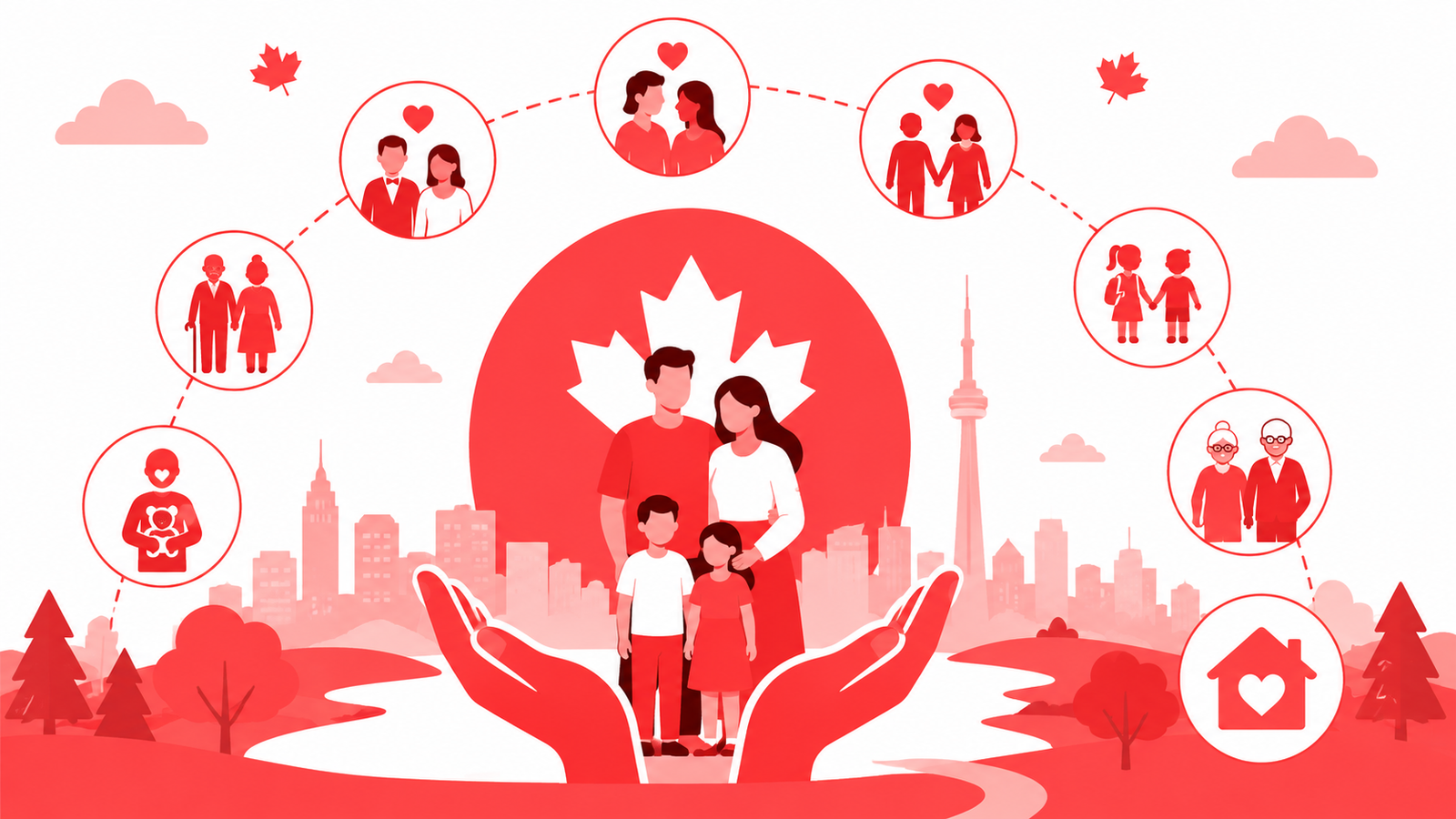
Family sponsorship is part of Canada’s immigration program that allows families to settle in Canada as a whole. Eligible Canadians can sponsor through this application:
- husband and wife
- General-regulation companion
- conjugal partner
- Dependent children
- parents and grandparents (when consumption opens)
- Some orphaned loved ones
- Other suitable homes in restrained condition
Who can sponsor a family member?
To sponsor someone under the Canadian Family Sponsorship Program, you must:
- Be at least 18 years older
- Be a Canadian citizen or permanent resident
- Live in Canada (or if you are a Canadian citizen abroad and intend to return before your supported member of the family arrives).
- Sign a sponsorship settlement
- Agree financial guidance for the supported person
- No social assistance (except disability blessing)
- Don’t let bankruptcy happen
- not under an eviction order
There are no serious criminal convictions that impact sponsorship eligibility, You can also review the official IRCC eligibility requirements for sponsors.
Who can have sponsorship?
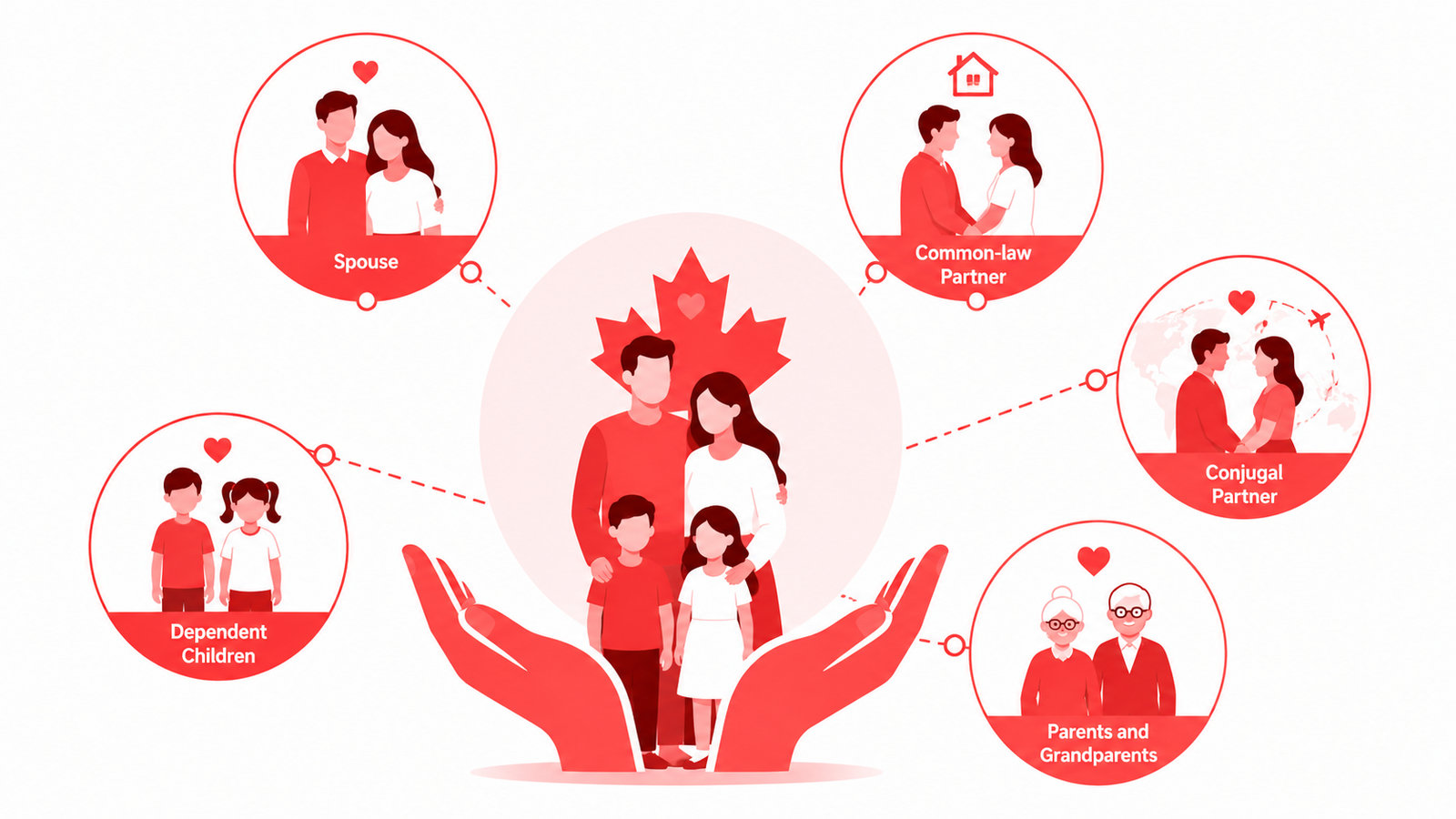
Qualified own family members are:
husband and wife
A legally married husband or wife.
common-law-partner
A partner who has lived with you continuously for at least 365 days.
Spouses
A partner outside of Canada in which marriage or cohabitation is not possible due to grand circumstances.
Dependent children
Children generally older under the age of 22 who are single and financially based.
parents and grandparents
Invitations issued and available through IRCC’s Parent and Grandparent Program.
Financial requirements
Unlike many immigration streams, sponsoring a spouse or dependent child generally no longer requires a combination of minimum income thresholds.
However, you must show that you can help the supported family member financially and meet all sponsorship obligations.
For mothers and fathers and grandparents, sponsors are required to meet minimum required income (MNI) requirements.
relationship needs
One of the most important family sponsorship Canada requirements is proving that your dating is real.
You can also request proof with IRCC:
- Marriage certificate
- Photographs together
- United Bank Bill
- Lease agreements
- Utility bills
- Travel Facts
- Communication records
- Affidavits of family and friends
Providing strong evidence facilitates reducing delays and requesting additional documents.
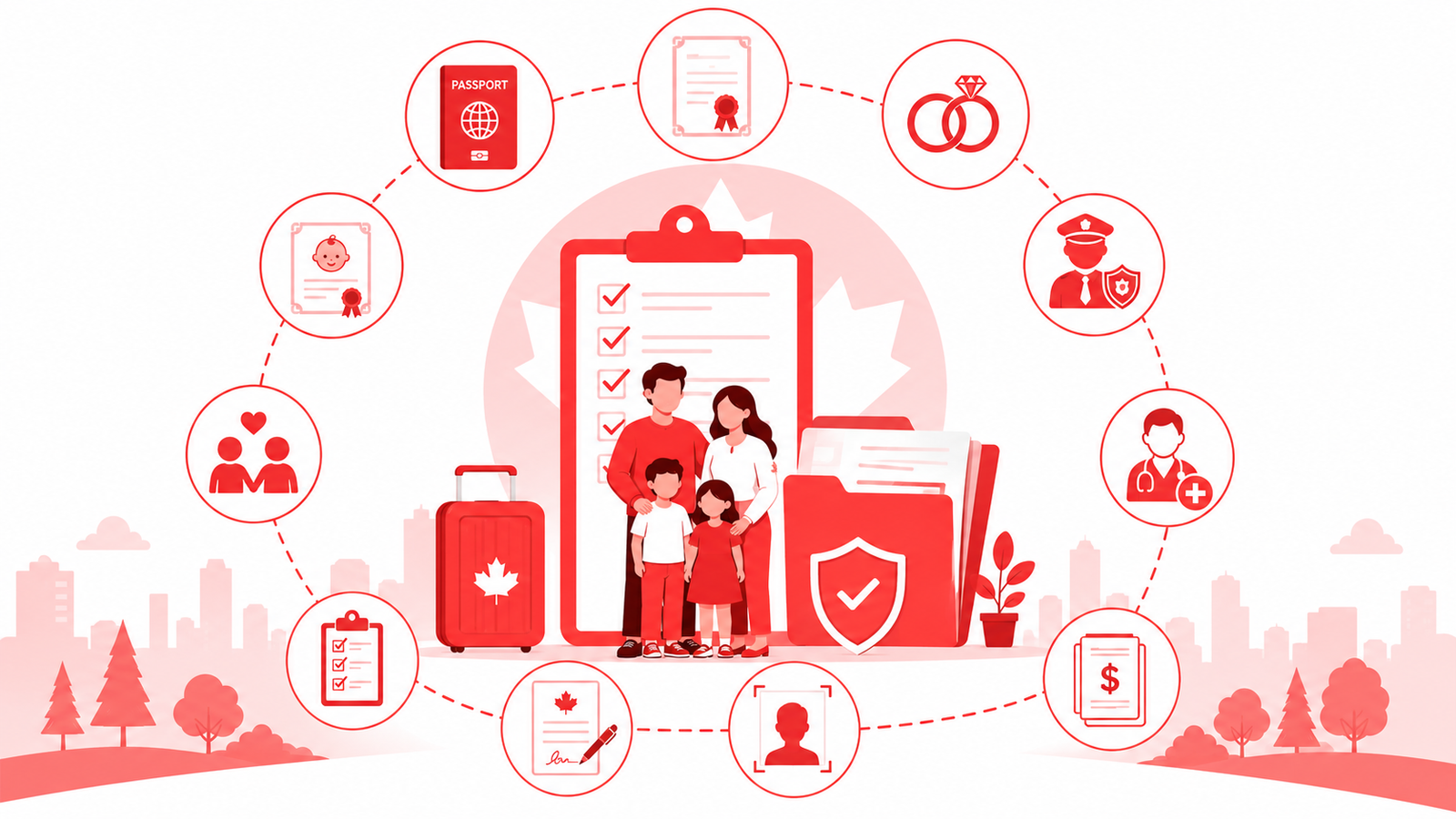
Required Documents
Depending on your scenario, you may need:
- Valid passport
- Birth certificate
- Marriage Certificates (if applicable)
- Police certificate
- Medical examination
- Evidence of courtship Immigration paperwork
- Passport pics
- Financial Files (if required)
Always ensure that files are complete and translated into English or French if necessary.
Application process
Step 1: Confirm eligibility
Verify that the sponsor and applicant meet IRCC requirements.
Step 2: Gather the documents
Collect all necessary supporting evidence before filing the software.
Step 3: Complete the Forms
Carefully complete every necessary immigration form.
Step 4: Pay government fees
Submit the necessary sponsorship and perpetual house charges.
Step 5: Submit your application
Applications are submitted in line with contemporary IRCC strategy.
Step 6: Wait for Processing
IRCC opinions software, verifies files, and may request additional statistics.
Step 7: Get a decision If authorized
your family member gets a permanent home and can move to Canada.
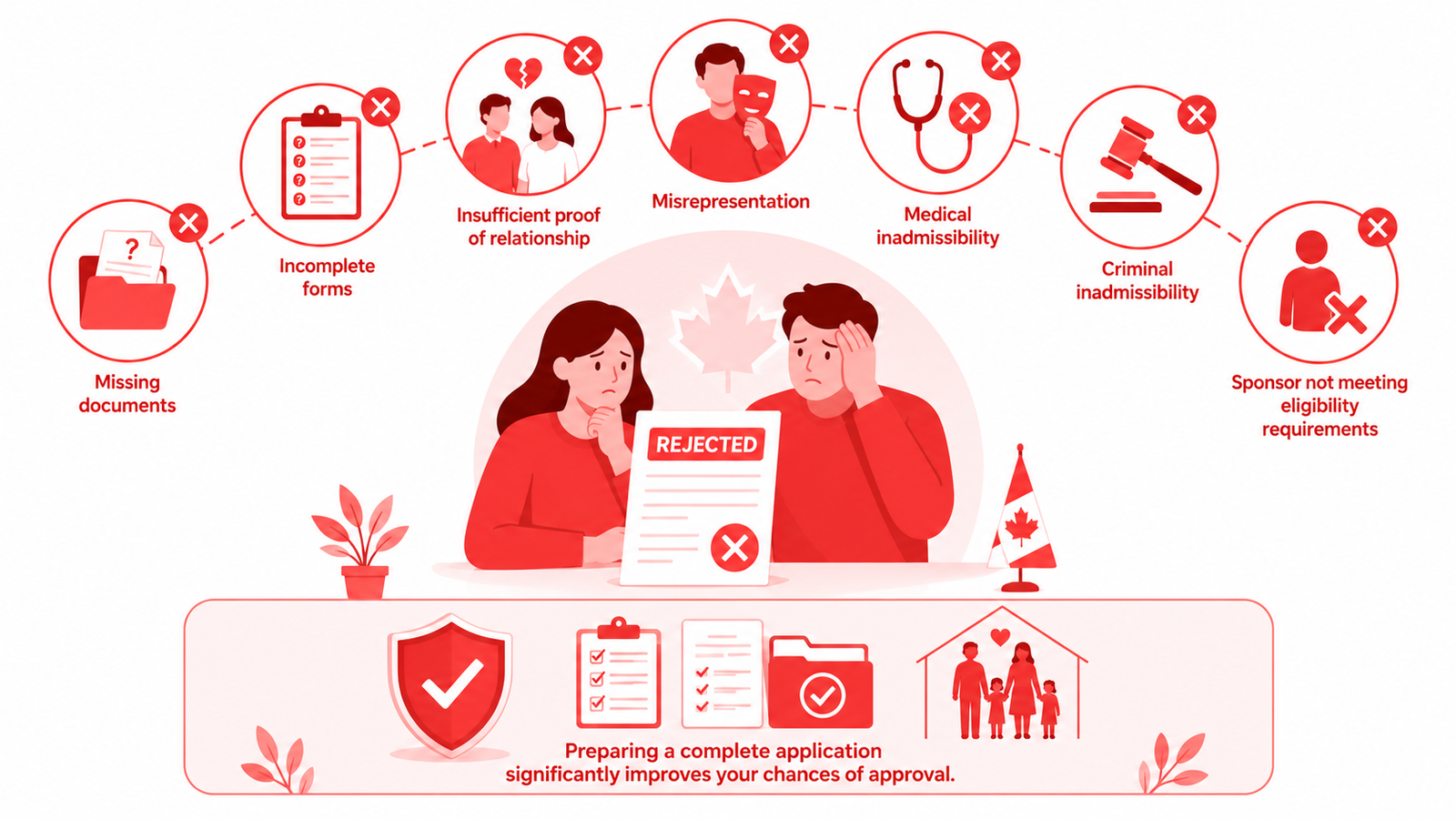
Applications are rejected for common reasons
Applications may be rejected because:
- Missing files
- Incomplete bureaucracy
- Insufficient evidence of relationship
- Misrepresentation
- medical inadmissibility
- Criminal inadmissibility
- Sponsor does not meet eligibility requirements
Preparing a complete application substantially improves your chances of approval.
How long does family sponsorship last?
Processing times vary depending on:
- The home country
- Application Type
- Completeness of the document
- IRCC Workload
Current processing instances may trade for the duration of the year, so applicants should continually review the latest IRCC updates.
Tips for a strong application
To enhance your software:
- Submit complete documentation.
- Include evidence of strong relationships.
- Check every immigration form twice.
- Respond promptly to IRCC requests.
- Keep copies of the entire submission.
- If your case is complicated, work with an experienced immigration professional.
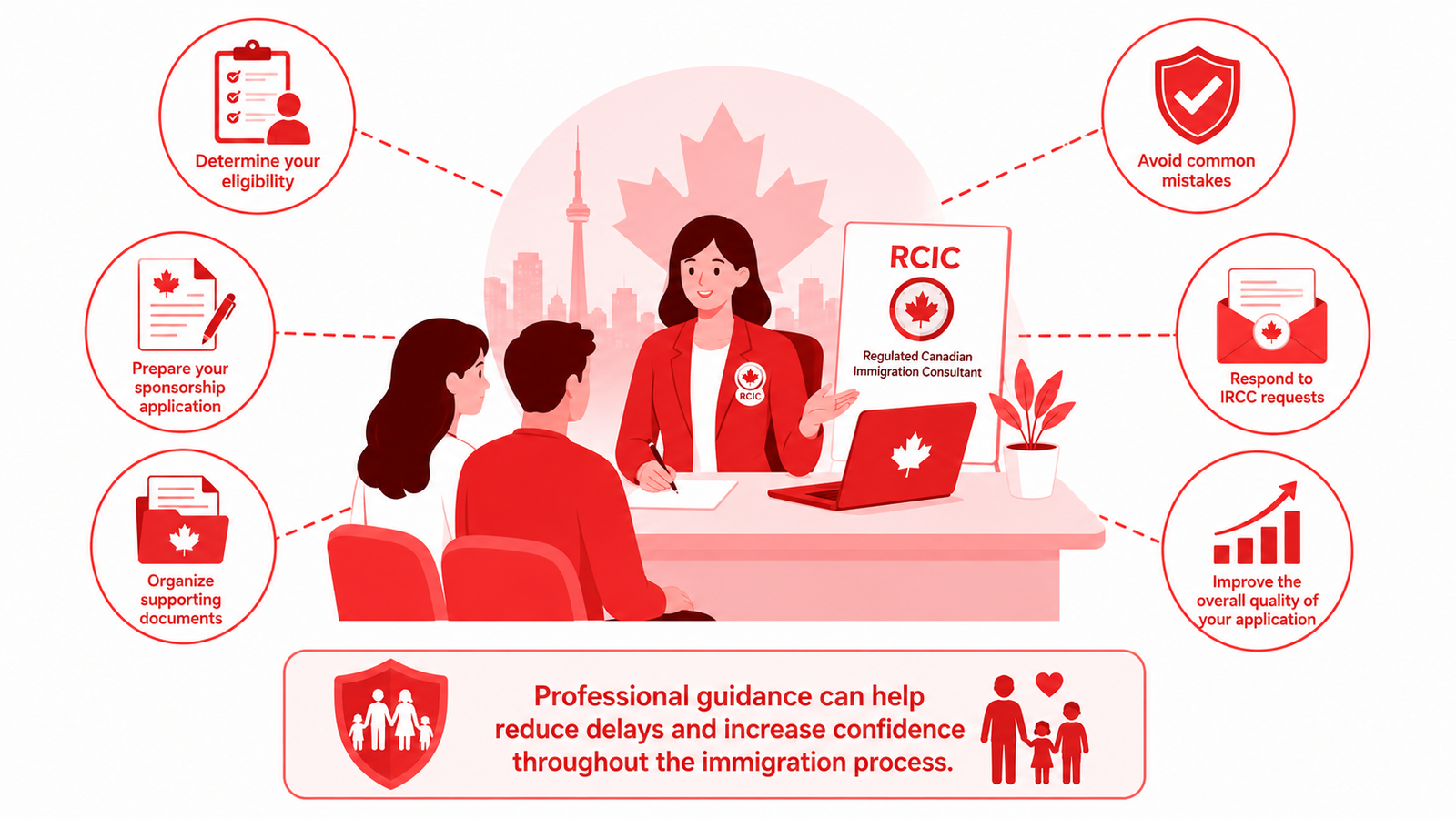
Why work with RCIC?
A Regulated Canadian Immigration Consultant (RCIC) can help you:
- Determine your fitness
- Prepare your sponsorship software
- Organize support files
- Avoid common mistakes
- Respond to IRCC requests
- Improve the general nicely of your software
Operating a business can help reduce delays and boost confidence in immigration procedures.
Frequently Asked Questions
1. Can I sponsor my spouse if I am unemployed?
likely. In general, there is no minimum profit requirement to sponsor a partner, however, you need to demonstrate your ability to meet your sponsorship obligations.
2. Can permanent citizens sponsor a circle of kindred members?
Yes. Permanent citizens may additionally sponsor an eligible family person in the event that they meet the IRCC requirement.
3. Do I need an attorney to sponsor my partner?
No. However, many candidates choose to work with RCIC or an immigration professional to help put together a complete and thorough application.
4. How abundant is the value of sponsoring your own family?
Depending on the form of sponsorship, government fees can be gradual over the years. Additional fees may additionally include scientific testing, police certification and record translation.
5. Can I ever sponsor my mother or father or grandparents?
No. Sponsoring a mother and father and a grandparent is easiest when the Government of Canada opens the Parent-Grandparent Program (PGP) and invites eligible sponsors to apply. If this system is closed, you may want to explore the Super Visa as an opportunity.
6. What happens if IRCC requests additional files?
If IRCC requests further data or supporting documentation, you must submit them by the deadline provided. Responding quickly and providing complete, accurate information can help avoid unnecessary delays or denial of your application.
7. Can I have my based youth in my own family sponsorship utility?
Yes. Eligible dependent children may be included in family sponsor software in the event that they meet the definition of IRCC of an established infant. Eligibility is based entirely on factors including age, marital status and financial dependence on the time of the software.
Need help with family sponsorship?
Building a family sponsorship application can feel overwhelming, especially when gathering documentation and meeting IRCC requirements.
At Hejazi Immigration Consulting, we help people and households grasp Family Sponsorship Canada requirements, prepare complete applications, and navigate each step of the immigration procedure with self-assurance.
Book a consultation today to discuss your family sponsorship case and receive professional guidance tailored to your circumstances.